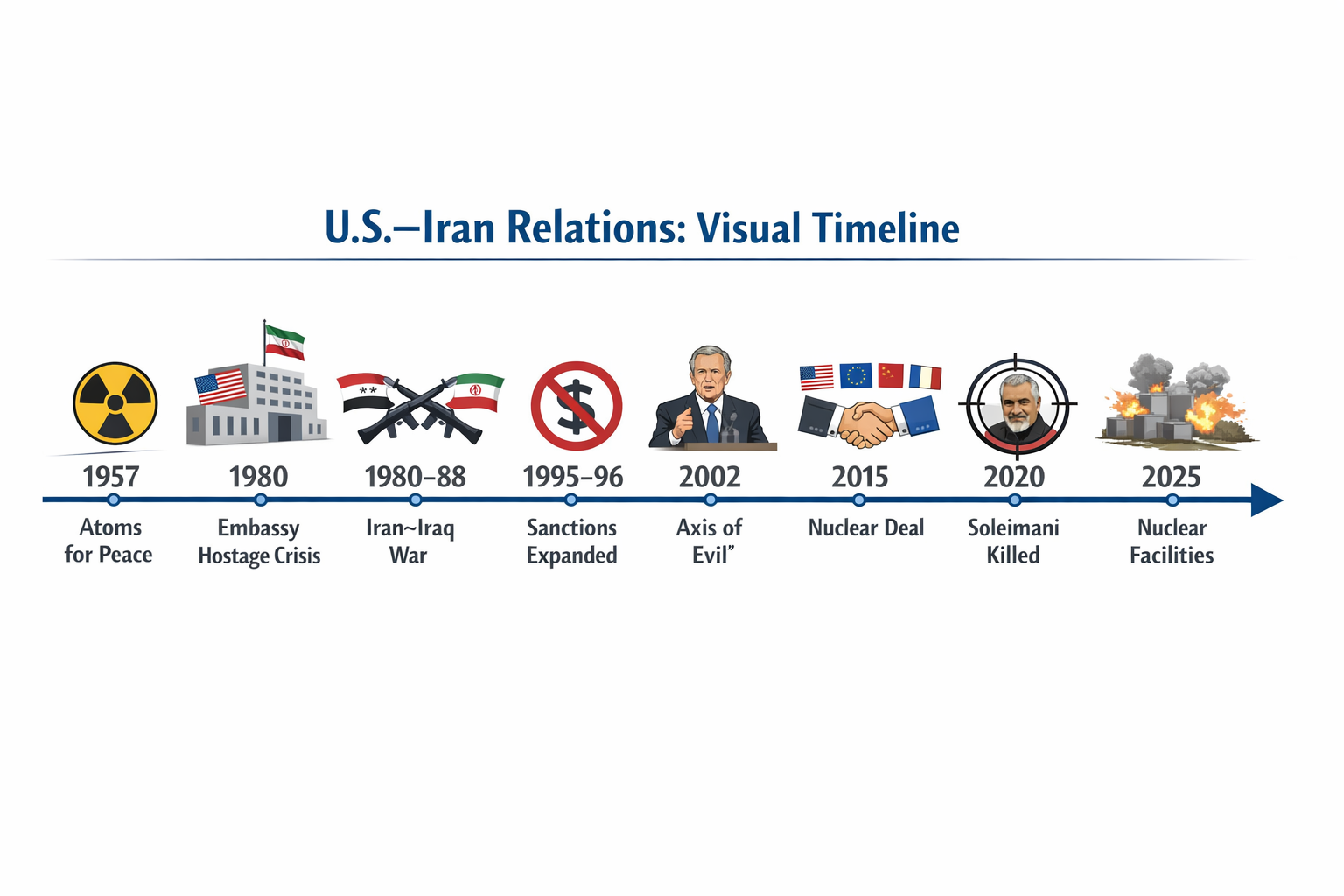
U.S.–Iran Current Relationship
The relationship between the United States and Iran has become one of the most significant and volatile political conflicts in recent decades. Iran is a major Middle Eastern power with a population of about 90 million and is governed by Ayatollah Ali Khamenei, the Supreme Leader. While Iran technically has a parliament, real political power rests with Khamenei and institutions loyal to him. He has final authority over major decisions, including how protests are handled and how Iran engages with foreign powers.
Iran was once a close ally of the West, particularly the U.S., but this relationship collapsed after the 1979 Islamic Revolution, which overthrew the U.S.-backed shah and replaced him with a strict Shia Islamic regime. Since then, Iran has been governed according to religious law, with limited tolerance for dissent and severe restrictions on personal freedoms. Criticism of the regime is often met with censorship, arrest, or violence.
Recently, the United States and Iran have taken actions that show how tense the relationship is right now. The U.S. has increased its military presence in the Middle East and recently shot down an Iranian drone near a U.S. aircraft carrier. Iran has also responded by moving naval forces and continuing activities linked to its nuclear program. At the same time, both countries are trying to avoid a full war, as officials from both sides have signaled that limited talks or negotiations could still happen.
Overall, the U.S. and Iran remain stuck in a tense and unstable relationship. Recent military actions and long-standing distrust keep the situation risky, even without a full war. Whether things get worse or calm down depends on how both sides choose to handle pressure and talks moving forward.