Korea, Japan Leaders Pledge Deeper Cooperation in Nara Summit, Signal Unity With ‘Drum Diplomacy’
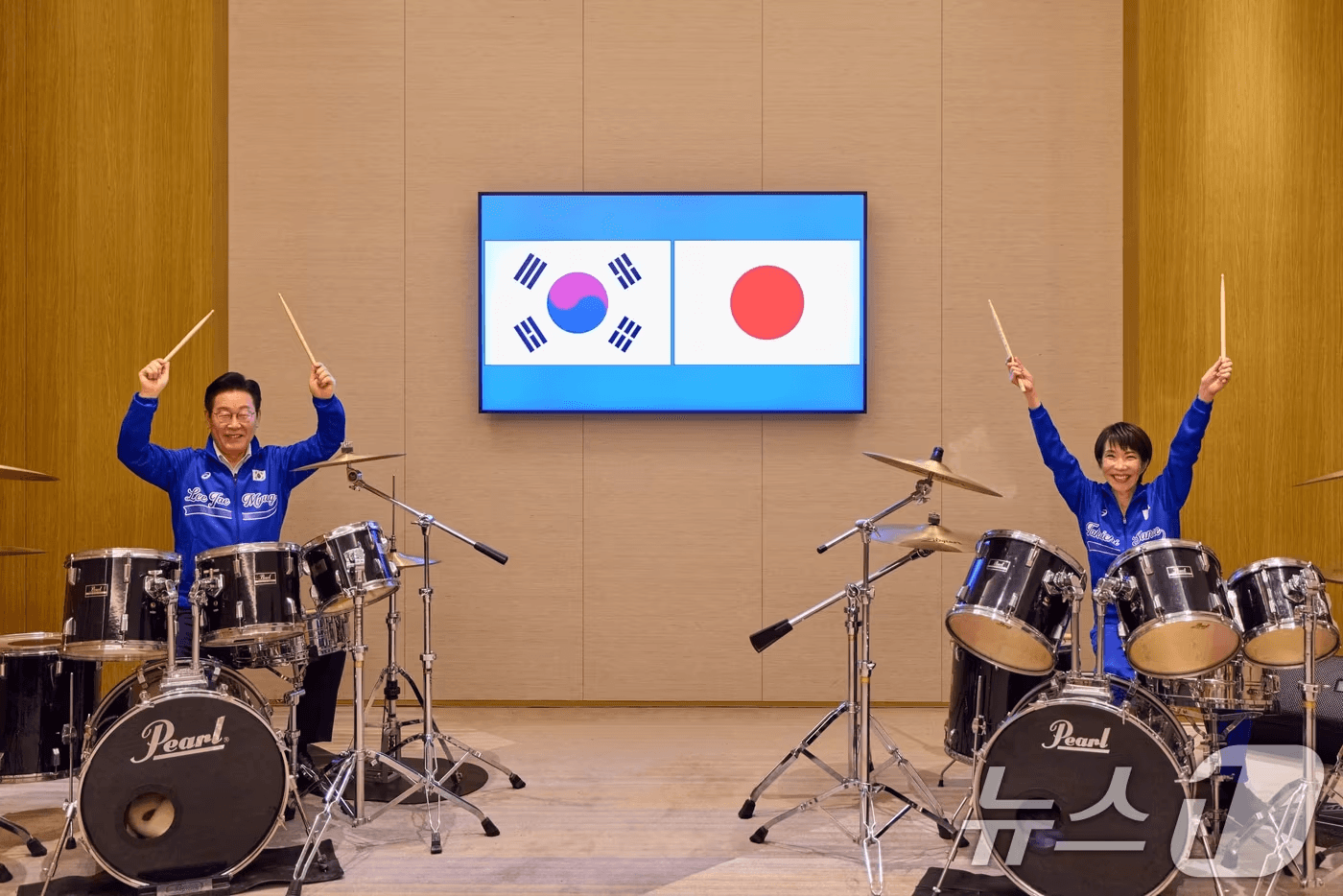
On Tuesday, January 13, 2026, at a Korea–Japan summit in Nara, Japan, South Korean President Lee Jae Myung and Japanese Prime Minister Sanae Takaichi agreed to deepen bilateral cooperation on security, economic resilience, and cultural exchange, as the two neighbors seek to stabilize ties amid rising regional tensions.
The summit, held in Japan’s ancient capital of Nara, ended with a highly publicized symbolic gesture: the two leaders sat side-by-side and played drums together to K-pop hits including BTS’ “Dynamite” and “Golden” from KPop Demon Hunters. The surprise performance was arranged by Takaichi—known for her interest in music and past experience as a drummer.
President Lee described the moment as a metaphor for diplomacy, expressing hope that Korea and Japan could “harmonize” despite differences—while acknowledging his performance was “a little clumsy.”
Concrete Achievements: What the Summit Delivered
While officials did not announce a single headline-grabbing treaty, both sides framed the meeting as an effort to institutionalize cooperation and keep the relationship from sliding back into periodic political conflict.
1) Commitment to “shuttle diplomacy” and tighter leadership-level coordination
Prime Minister Takaichi stressed the importance of continuing close communication and sustaining shuttle diplomacy, signaling that Tokyo wants regular leader-to-leader engagement to prevent future diplomatic freezes.
2) Expanded cooperation on security and regional stability
The leaders emphasized deeper security cooperation as well as broader diplomatic coordination, reflecting a shared sense that instability in East Asia is increasing.
3) Economic security and supply-chain resilience moved further into the center
Both governments have increasingly framed cooperation through the lens of economic security—a term covering sensitive areas such as strategic materials, advanced technology, and industrial resilience during geopolitical disruption.
4) Public diplomacy boost: “friendship optics” meant to lock in momentum
Analysts said the upbeat image was not accidental. The performance functioned as a public message that the two governments intend to move forward despite unresolved historical disputes and domestic political sensitivities.
Why Japan Is Pushing This Now: The China Factor
Behind the friendly atmosphere lies a strategic calculation: Japan’s outreach to South Korea is widely seen as tied to intensifying competition with China.
Tokyo has increasingly pursued closer coordination among U.S. allies and partners in the region, seeking to reinforce deterrence, secure supply chains, and reduce strategic vulnerability in a more confrontational environment. In that context, South Korea’s participation matters—not only as Japan’s closest neighbor, but as a major U.S. ally and a key player in regional manufacturing and technology ecosystems.
In practical terms, Japan’s objective is clear: it wants South Korea anchored more firmly into a Japan–U.S.–Korea security and economic framework, reducing the space for Beijing to isolate Japan or pressure Seoul into neutrality.
Past Remarks Resurface: Takaichi’s Hard Line and What It Signals
Prime Minister Takaichi’s prior comments on regional security have also drawn renewed attention. Her rhetoric has often reflected a strong emphasis on deterrence and alliance-based coordination, particularly amid concerns over a potential Taiwan contingency.
Even when Japan’s summit language avoids directly naming China, its security framing increasingly assumes a future in which U.S. partners must coordinate more tightly—making Seoul’s diplomatic alignment strategically valuable.
What Changed for Korea-Japan Relations After This Summit?
The biggest change is not a legal breakthrough, but that relationship management is becoming routine.
The leaders reaffirmed a direction of continued engagement, rather than letting disputes dictate the agenda. Cooperation is being framed less as an emotional reconciliation project and more as a strategic necessity under a volatile regional order.
The summit’s cultural gesture also strengthened the perception of improving ties, an asset both governments can use to defend cooperation at home and to maintain momentum when policy disagreements emerge.
The Nara summit reinforced a trend of Korea and Japan moving toward deeper coordination on security and economic resilience, even as underlying strategic motivations—especially Japan’s desire to build a stronger front amid China-related uncertainty—remain central.
And in an era when summit outcomes are measured not only by agreements but also by narrative control, the leaders’ “drum diplomacy” offered something increasingly valuable in East Asian geopolitics: a public signal that cooperation is becoming the default setting.