Global Warming and Jet Streams: Disappearing Weathers
Can you imagine California with storms and Texas all covered in snow? Well, that is no longer a futuristic story. At Christmas 2025, California, where the weather was supposed to be clear and bright, was dealing with storm damage and recovery efforts instead of listening to joyful carols. Texas, which lies farther south than California, has even experienced repeated snowstorms over the past few years.
This change has not been limited to the United States, but has appeared across the entire world. In particular, abnormal winter weather patterns have become more visible as the jet stream system weakens, allowing regions in parts of southern Asia to become colder than areas in Russia.
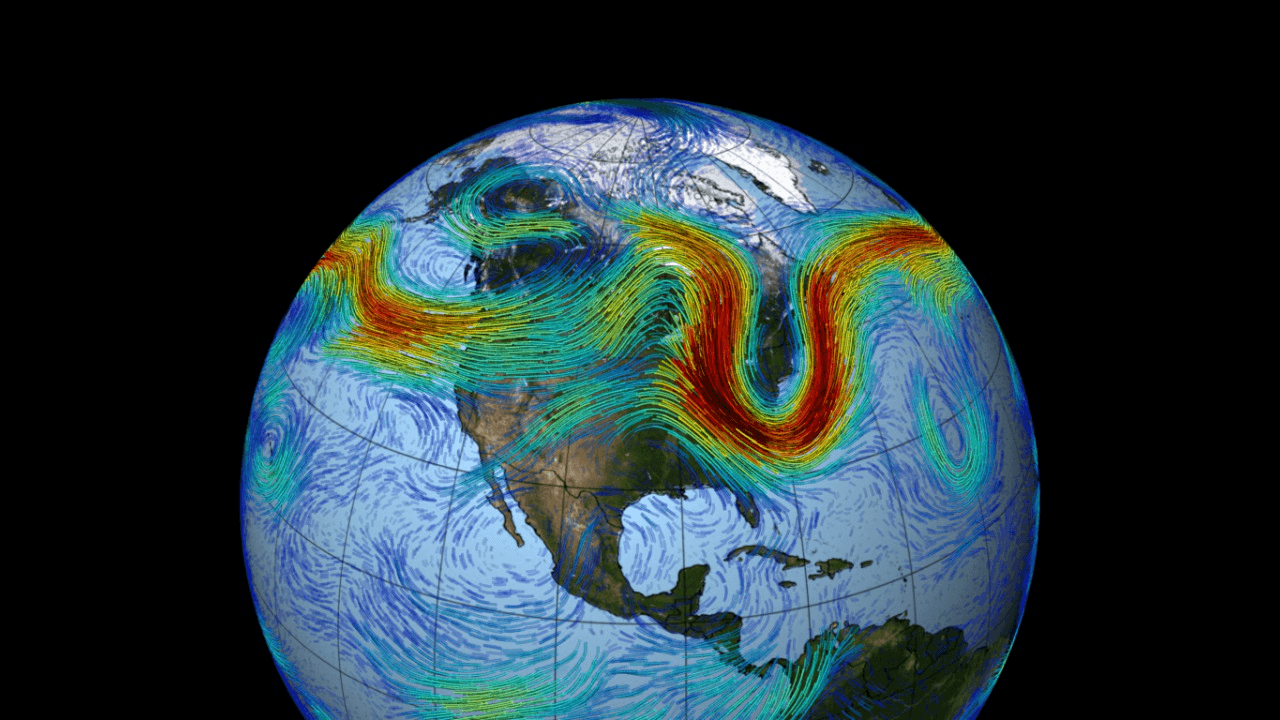
The jet stream is a fast-flowing air current that moves around the Arctic and helps keep extremely cold air confined to the northernmost parts of the hemisphere. In the past, the jet stream formed a relatively stable boundary that trapped cold air near the polar region. However, today, part of this cold air pocket has stretched outward, as if a pouch were being pulled open, allowing cold air to move toward Korea, Japan, and China.
Meteorologists have recently raised alarms about an unusually early Arctic breakdown, which is intensifying ahead of February. This breakdown signals a weakening and premature collapse of the cold air structure over the Arctic, typically seen late in winter, raising concerns among scientists. The situation is linked to the instability of the polar vortex, where the usual stable circulation of cold air has fragmented, leading to increased southward movement of cold air.
Consequently, mid latitude regions in the Northern Hemisphere are experiencing rapid temperature fluctuations, with extreme cold conditions plummeting to minus twenty degrees Celsius only to be followed by unexpected warm spells exceeding ten degrees above normal. This phenomenon causes sudden shifts in weather patterns, wherein snowfall can quickly transition to rain, and rapid nighttime temperature drops can create hazardous freezing conditions. Such anomalies are associated with the growing instability of the upper atmospheric circulation.
Moreover, an early Arctic breakdown does not merely result in a single cold wave. Distortions in the jet stream lead to prolonged atmospheric instability, enabling persistent extreme weather patterns, including sustained cold, heavy rain, or snowstorms, in specific regions rather than allowing swift weather transitions. This climatic phenomenon significantly impacts East Asia, notably Korea, as cold air flows southward along the jet stream, resulting in early and potent cold outbreaks across the Korean Peninsula, Japan, and eastern China, while also permitting unusual warm spells.
A key point emphasized by meteorologists is that these early Arctic breakdowns are no longer rare events. They are becoming part of a recurring pattern. Scientists explain that the rapid loss of Arctic sea ice allows more heat to escape from the ocean into the atmosphere. This weakens the temperature difference between the Arctic and lower latitudes. Because this temperature contrast is one of the main forces that keeps the jet stream strong and stable, its reduction causes the jet stream to slow down, become more distorted, and break more easily.
For this reason, the early breakdown of the Arctic circulation cannot be viewed simply as a temporary natural fluctuation. While it is difficult to attribute every single cold wave or snowstorm directly to global warming, many experts agree that the long-term trend toward earlier and more frequent disruptions in the Arctic atmosphere is becoming increasingly clear.
As a result, winter today no longer behaves like a single, stable season. In the past, once cold weather set in, it tended to remain consistently cold before gradually transitioning into spring. In contrast, modern winters are increasingly made up of several short and sharply changing weather phases. These rapid transitions place new stresses on transportation systems, agriculture, energy use, and everyday life.
In other words, what meteorologists describe as an “unusually early Arctic breakdown” is not only a way to explain the weather of this coming February. It is also a signal that a new and more unstable pattern of winter may become a lasting feature of our climate in the years ahead.